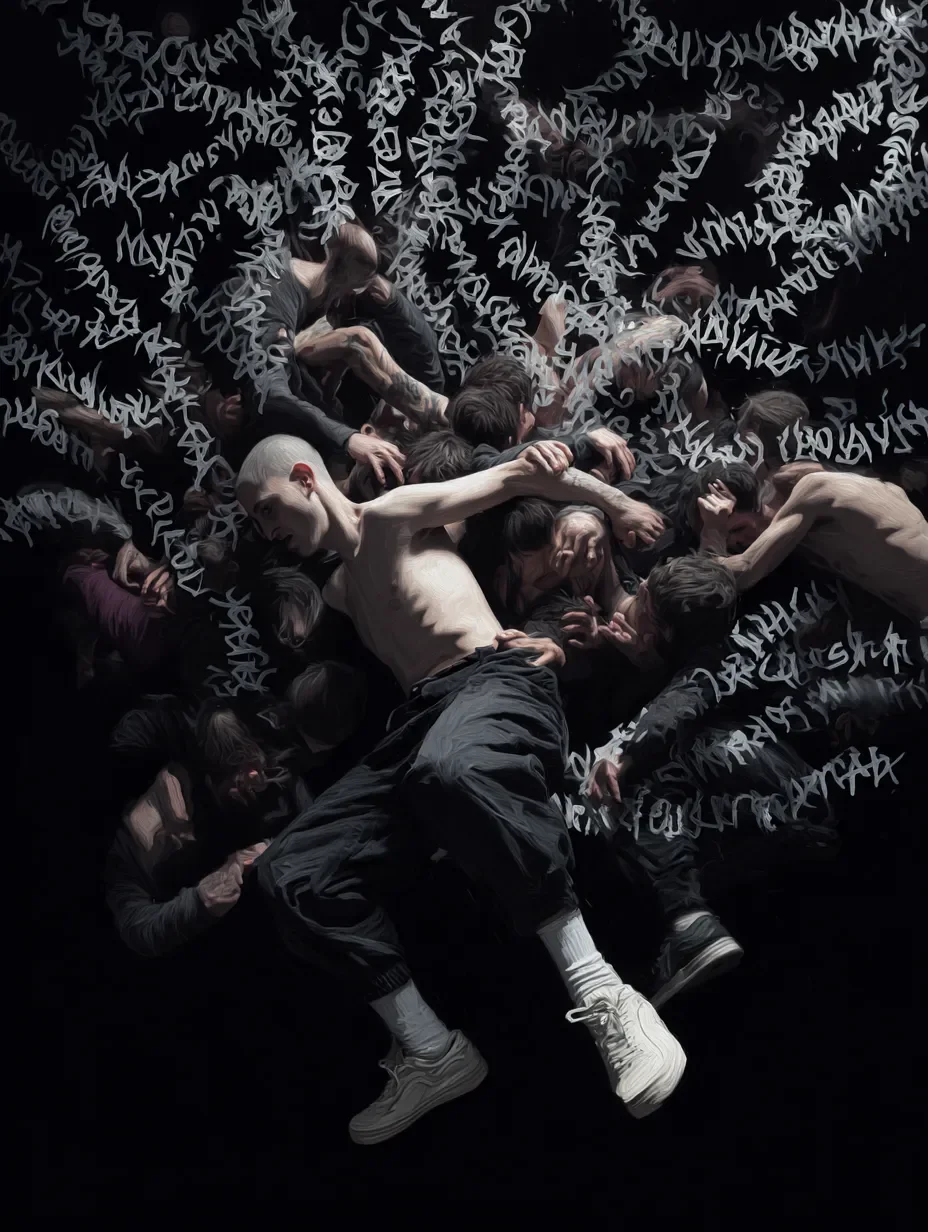
wetboysarchive focuses on moments of queer masculinity that are usually fleeting, private or left undocumented. working from memory rather than photographic reference, the project reconstructs scenes of desire, vulnerability and self-presentation as oil-like digital images — holding on to what would otherwise disappear.
artist bio
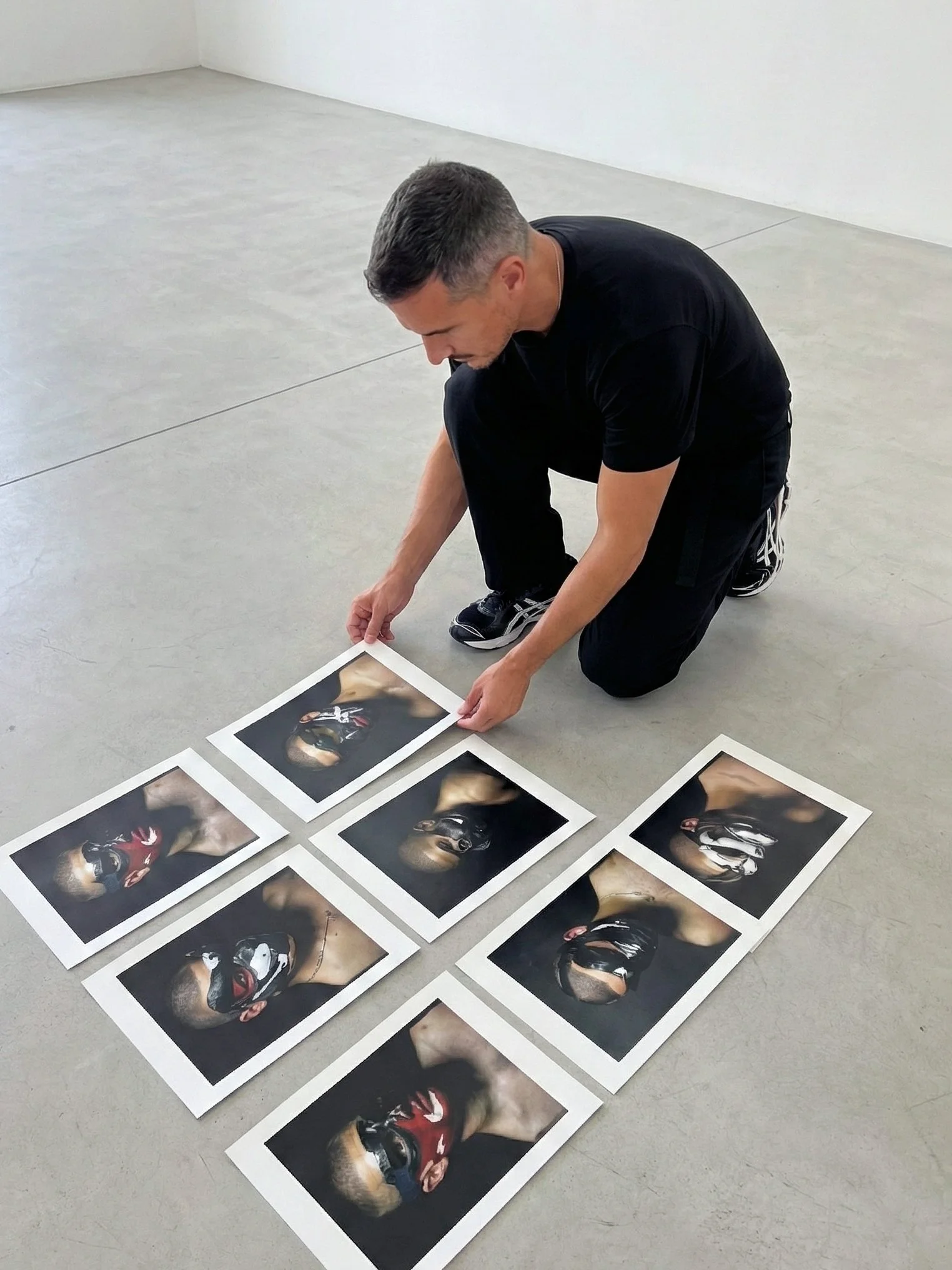
wetboysarchive is the work of berlin-based artist robert schaefer (b.1971). his visual practice is rooted in years spent observing queer masculinity across different environments — from everyday moments of youth, desire and self-presentation in public and private settings to berlin’s club culture and its camera-free safe spaces, such as berghain and kitkat.
in places where intimacy happens beyond documentation, schaefer works from memory, gesture and atmosphere rather than photographic reference, reconstructing scenes that exist as much in recollection as in physical experience.
drawing on a background in visual communication, philosophy and creative direction, he uses digital, oil-like painting to hold on to moments that were never meant to be fixed — forming a personal archive of fragments shaped by vulnerability, observation and desire.
wetboysarchive continues to evolve as a body of work moving between lived experience, reconstruction and the shifting aesthetics of queer masculinity.
process
each work begins with recall, but also with description. a remembered moment is translated into language — sometimes as a precise visual notation, sometimes as a cluster of fragments, textures and emotional cues.
prompting becomes a way of exploring the image rather than producing it outright: each iteration tests what belongs, what remains vague, and what still needs to be named more clearly.
the process carries its own tension: a slow oscillation between attention and delay, expectation and disappointment, until something unresolved begins to hold. colour, gesture, light and painterly surface are gradually refined until the image holds the charge of the memory.
some works remain singular; others unfold into series, where a motif, a mood or a bodily tension continues to evolve across multiple variations.
wetboysarchive —
an internal conversation
-
because i’m not painting events — i’m painting afterglow. the seconds that stay behind when bodies have already moved on. i like the quiet that follows intensity, the way it hums under the skin.
-
it lets me treat memory like material — not to perfect it, but to return to it. each prompt is an attempt to describe a moment as i remember it, and each iteration shows me what’s still missing. the process forces me to go deeper, to name objects, textures and gestures more precisely, until the image begins to hold the weight of the memory itself.
-
yes. i’m not observing from the outside. i’m remembering from the inside. there’s a difference. the figures aren’t objects — they are states of mind, echoes of encounters, gestures that stayed with me longer than they should have.
-
i think it was the fear of forgetting. the way certain gestures fade faster than they deserve to. some nights in berlin felt so charged, so fragile, that they slipped into memory almost before they were over. wetboysarchive became a way to keep the pulse of them alive, even if only as fragments.
-
because memory lies beautifully. it blurs the edges, distorts the heat, protects what needs protecting. the clubs i moved through didn’t allow cameras, and maybe that was the point — intimacy happened outside documentation. the paintings carry that tension: they are true, but never literal.
-
its contradictions. the way strength and vulnerability coexist in the same breath. the armour, the longing, the fetish of clothing — sports socks, sneakers, uniforms — worn as protection and projection. i’m not interested in performance as much as in the moment the performance cracks open.
-
recognition. not of a specific night or person, but of that sensation — the wanting, the uncertainty, the electricity of a moment suspended between bodies. if someone feels a quiet ache, a soft pulse of something half-forgotten, that’s enough.
-
a place to return to. a way of mapping who i was, who i’ve been with, and the worlds we moved through. it keeps evolving because memory keeps shifting. i follow where it leads.
-
they’re touchpoints. fragments made physical. a way for the work to leave the screen and exist in someone else’s space, quietly. they aren’t products; they’re extensions of the memory-loop the archive creates.